- English
- French
- German
- Portuguese
- Spanish
- Russian
- Japanese
- Korean
- Arabic
- Greek
- German
- Turkish
- Italian
- Danish
- Romanian
- Indonesian
- Czech
- Afrikaans
- Swedish
- Polish
- Basque
- Catalan
- Esperanto
- Hindi
- Lao
- Albanian
- Amharic
- Armenian
- Azerbaijani
- Belarusian
- Bengali
- Bosnian
- Bulgarian
- Cebuano
- Chichewa
- Corsican
- Croatian
- Dutch
- Estonian
- Filipino
- Finnish
- Frisian
- Galician
- Georgian
- Gujarati
- Haitian
- Hausa
- Hawaiian
- Hebrew
- Hmong
- Hungarian
- Icelandic
- Igbo
- Javanese
- Kannada
- Kazakh
- Khmer
- Kurdish
- Kyrgyz
- Latin
- Latvian
- Lithuanian
- Luxembou..
- Macedonian
- Malagasy
- Malay
- Malayalam
- Maltese
- Maori
- Marathi
- Mongolian
- Burmese
- Nepali
- Norwegian
- Pashto
- Persian
- Punjabi
- Serbian
- Sesotho
- Sinhala
- Slovak
- Slovenian
- Somali
- Samoan
- Scots Gaelic
- Shona
- Sindhi
- Sundanese
- Swahili
- Tajik
- Tamil
- Telugu
- Thai
- Ukrainian
- Urdu
- Uzbek
- Vietnamese
- Welsh
- Xhosa
- Yiddish
- Yoruba
- Zulu
Why Is Rice Protein Peptide a Game-Changer for Clean-Label, Clear Beverage Formulas?
Look, if you’re working with plant proteins, you’ve hit a familiar wall at some point. You need something clean-label and hypoallergenic, but the texture or taste just doesn’t work. Maybe your shake turns gritty, or your clear drink goes cloudy. That’s where the conversation around Rice Protein Peptide really gets practical. It’s not just another entry on the plant-protein list. It’s what you spec in when the standard rice protein concentrate or pea protein isolate almost works, but the formulation demands something finer—something that disappears.
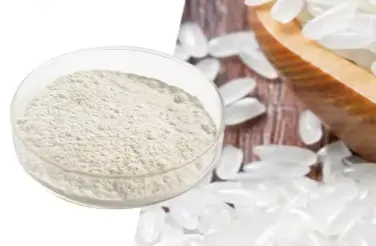
A lot of people don’t realize that rice peptide starts its life differently. It’s not just a finer grind of the same stuff. The real magic—or rather, the science—happens during enzymatic hydrolysis. It’s a controlled breakdown. Think of it like taking a long chain and snipping it into specific, predictable shorter lengths. This isn't random. This control is what dictates whether you get a bitter powder or a neutral one, whether it dissolves crystal clear in a cold beverage or still needs a bit of help. When we talk to our partners making this, we’re less interested in the protein percentage upfront and more interested in their chromatograms. What’s the molecular weight distribution? That single graph tells you more about how it will perform in your product than a dozen spec sheets.
So where does it actually shine? Forget the obvious protein bar for a second. The real wins are in the tricky applications. We’re seeing it in hypoallergenic infant formula, where digestibility is everything and parents are reading labels like detectives. It’s a star in post-surgical clinical nutrition drinks, where patients have compromised systems and every gram of protein needs to be absorbed effortlessly. But the coolest stuff is in modern wellness. One client uses a specific low-molecular-weight rice peptide in a canned, sparkling “mindfulness” drink. They needed a protein component for satiety and amino acid support, but it had to be invisible—no cloud, no sediment, no flavor interference. Standard proteins failed. The peptide version worked.
Here’s what smart buyers are adding to their checklist now. It’s moved past protein assay and heavy metals:
- Taste Profile, Actually Tested: Not just “mild.” Send a sample and blend it into water at the target pH. Does it have the back-end bitterness that will ruin a delicate tea?
- Solubility Metrics in Real Conditions: 5% solution clarity (NTU), especially in acidic environments (pH 3-4). This is non-negotiable for beverage folks.
- The “Hydrolysis Story”: What enzymes? What’s the DH (Degree of Hydrolysis)? A supplier who’s vague here is just selling commodity powder. A good one can explain how their process minimizes bitter peptides.
- Allergen and Certifications: It’s naturally gluten-free and non-GMO, but you need the paperwork to prove it for your audits. Organic rice protein peptide commands a premium but opens specific market doors.
The trend isn’t just more protein anymore. It’s smart protein. It’s about specific functional outcomes. Some of these peptides are being studied for more than just nutrition—think bioactive properties that might support immune markers or skin health. The innovation isn’t just in finding a new source of protein; it’s in engineering the protein we already have to do more. The next wave is in precision blends: combining these rapidly absorbed rice peptides with slower-release proteins to create a sustained amino acid release profile, mimicking what was once only possible with dairy.

In the end, using Rice Protein Peptide is a technical decision, not just a marketing one. You’re paying for a solution to a formulation problem—be it clarity, flavor, or rapid absorption. The best partnerships happen when your supplier understands why you’re asking for it, not just that you want it. They should be able to tell you which of their grades will work in your high-acid juice blend versus your nutrition bar. It’s this layer of application-specific insight that separates a bulk ingredient from a strategic tool. For the formulator stuck between the promise of plants and the reality of product physics, it’s often the exact tool needed to bridge that gap.
IF You Are Interested In The Products We Operate And Other Related Categories, Please Write To Us And Contact Us. At The Same Time, You Can Also Browse Our Website To Find The Products You Want. We Provide Customized Services And Look Forward To Establishing Cooperation With You.
Email:sales@greenherbbt.com