- English
- French
- German
- Portuguese
- Spanish
- Russian
- Japanese
- Korean
- Arabic
- Greek
- German
- Turkish
- Italian
- Danish
- Romanian
- Indonesian
- Czech
- Afrikaans
- Swedish
- Polish
- Basque
- Catalan
- Esperanto
- Hindi
- Lao
- Albanian
- Amharic
- Armenian
- Azerbaijani
- Belarusian
- Bengali
- Bosnian
- Bulgarian
- Cebuano
- Chichewa
- Corsican
- Croatian
- Dutch
- Estonian
- Filipino
- Finnish
- Frisian
- Galician
- Georgian
- Gujarati
- Haitian
- Hausa
- Hawaiian
- Hebrew
- Hmong
- Hungarian
- Icelandic
- Igbo
- Javanese
- Kannada
- Kazakh
- Khmer
- Kurdish
- Kyrgyz
- Latin
- Latvian
- Lithuanian
- Luxembou..
- Macedonian
- Malagasy
- Malay
- Malayalam
- Maltese
- Maori
- Marathi
- Mongolian
- Burmese
- Nepali
- Norwegian
- Pashto
- Persian
- Punjabi
- Serbian
- Sesotho
- Sinhala
- Slovak
- Slovenian
- Somali
- Samoan
- Scots Gaelic
- Shona
- Sindhi
- Sundanese
- Swahili
- Tajik
- Tamil
- Telugu
- Thai
- Ukrainian
- Urdu
- Uzbek
- Vietnamese
- Welsh
- Xhosa
- Yiddish
- Yoruba
- Zulu
Why Is "Pure Saw Palmetto Extract" a Matter of Definition, Not Just Marketing?
If you're sourcing ingredients for prostate health or urinary support formulations, you've likely seen countless products claiming to be "pure" Saw Palmetto Extract. Derived from the ripe berries of the dwarf palm tree Serenoa repens, native to the Southeastern United States, this botanical has become a cornerstone of men's health supplements worldwide . However, the term "pure" in this context is deceptively complex. For serious formulators and procurement specialists, the conversation has moved far beyond marketing claims to focus on a standardized, well-characterized lipidosterolic extract that meets stringent pharmacopeial specifications . The question isn't whether an extract is "pure," but rather, does it contain the correct profile of fatty acids, phytosterols, and long-chain alcohols that define a clinically relevant, authentic ingredient?
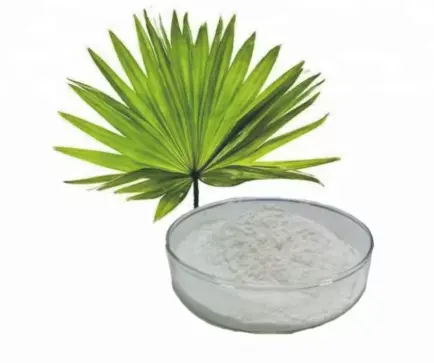
The journey to a genuine, high-quality Saw Palmetto Extract begins with the source material and is defined by rigorous analytical verification. The berries themselves are a complex matrix of lipids, and the extraction method—whether by supercritical CO₂, solvent hexane, or hydroalcoholic mixtures—profoundly influences the final composition . A premium extract, often standardized to a concentration of 320 mg of lipophilic extract per dose, is not just a simple powder; it is a concentrated lipidic complex . The benchmark for quality is the United States Pharmacopeia (USP) monograph for it . This standard specifies that a genuine extract must contain not less than 70.0% and not more than 95.0% of total fatty acids, calculated on an anhydrous basis. Furthermore, it must contain specific levels of sterols (between 0.2% and 0.5%) and, critically, long-chain alcohols like hexacosanol (between 0.15% and 0.35%) . This detailed fingerprint, verified by gas chromatography, is the true definition of a "pure" and authentic extract.
This rigorous standardization is not academic; it has direct implications for both safety and efficacy. A recent analysis of saw palmetto products on the market revealed a disturbing trend: many products failed to meet USP standards. One study found that of 28 commercial products, only one met the criteria for a standardized lipidosterolic extract . Research on the Korean market found that while fatty acid levels in some products were adequate, the levels of critical long-chain alcohols were below the minimum USP limit of 0.15%, with some samples containing almost undetectable levels, raising the possibility of adulteration . This heterogeneity means that a product labeled "pure saw palmetto" might lack the very compounds believed to contribute to its biological activity, leaving formulators with an ingredient of unpredictable and potentially zero value.

When you have a properly standardized extract that conforms to pharmacopeial standards, its applications are well-supported by clinical research. The most established and researched use for Saw Palmetto Extract is in the management of lower urinary tract symptoms (LUTS) associated with benign prostatic hyperplasia (BPH). The mechanisms of action are multifaceted and have been elucidated in recent studies. Research demonstrates that it possesses anti-proliferative and pro-apoptotic effects by inhibiting 5α-reductase, the enzyme responsible for converting testosterone to dihydrotestosterone (DHT), and subsequently reducing DHT expression both in vitro and in vivo . A 2025 comparative study found that 320 mg/day of saw palmetto significantly improved maximum urinary flow rates (by 23.1%) and reduced IPSS scores (by 74.6%) over 24 weeks, an efficacy comparable to pharmaceutical agents like finasteride and tamsulosin . Another 2024 trial using a USP-verified extract confirmed significant improvements in IPSS and quality of life scores, particularly in patients with moderate symptoms . Beyond BPH, its anti-androgenic and anti-inflammatory properties also support its use in formulations for healthy hair and scalp, targeting the hormonal pathways involved in hair thinning.
For procurement and quality assurance professionals, sourcing a genuine Saw Palmetto Extract is a matter of forensic verification. A standard Certificate of Analysis is insufficient; you must demand a comprehensive analytical dossier. First, insist on full USP compliance data. The supplier must provide gas chromatography (GC) analysis confirming the full fatty acid profile, including the specific ratios of lauric acid to other fatty acids as outlined in the USP monograph . Second, verify the sterol and long-chain alcohol content. The CoA must explicitly quantify compounds like β-sitosterol, campesterol, and hexacosanol, and demonstrate they fall within the specified USP ranges . Third, confirm the extraction method and absence of adulterants. Supercritical CO₂ extraction is preferred for producing a clean, solvent-free lipid extract with a high concentration of fatty acids . DNA verification and HPTLC fingerprinting can provide additional assurance of botanical identity and purity . Fourth, be wary of low-cost powdered extracts. The clinical evidence is built on lipidosterolic extracts, not simple berry powders, which have been shown to contain negligible levels of fatty acids .

The market trend for Saw Palmetto Extract is unequivocally moving toward higher quality and greater transparency. The proliferation of substandard and adulterated products has led to a demand for ingredients that are USP-verified and backed by rigorous, third-party testing . The future belongs to suppliers who can provide full traceability from the berry to the final extract, employing technologies like DNA analysis to authenticate the raw material and supercritical fluid extraction to ensure a pure, potent, and consistent lipid profile . As the scientific understanding of its mechanisms deepens, we may see the development of extracts standardized to specific ratios of fatty acids or sterols for targeted therapeutic effects, moving beyond the 320 mg daily dose that remains the clinical standard .

In summary, sourcing a genuine Saw Palmetto Extract is an exercise in analytical rigor. Its remarkable potential for supporting prostate and urinary health is validated by decades of clinical research, but that potential is only realized when the extract matches the exacting standards of the USP monograph. Success hinges on partnering with a supplier who provides not just a bulk powder, but a fully characterized lipidosterolic complex, supported by transparent data that confirms its identity, purity, and potency. For brands aiming to lead in the men's health category, a well-sourced, pharmacopeia-grade it is not just an ingredient—it is the foundation of a credible, effective, and trustworthy product.
IF You Are Interested In The Products We Operate And Other Related Categories, Please Write To Us And Contact Us. At The Same Time, You Can Also Browse Our Website To Find The Products You Want. We Provide Customized Services And Look Forward To Establishing Cooperation With You.
Email:sales@greenherbbt.com