- English
- French
- German
- Portuguese
- Spanish
- Russian
- Japanese
- Korean
- Arabic
- Greek
- German
- Turkish
- Italian
- Danish
- Romanian
- Indonesian
- Czech
- Afrikaans
- Swedish
- Polish
- Basque
- Catalan
- Esperanto
- Hindi
- Lao
- Albanian
- Amharic
- Armenian
- Azerbaijani
- Belarusian
- Bengali
- Bosnian
- Bulgarian
- Cebuano
- Chichewa
- Corsican
- Croatian
- Dutch
- Estonian
- Filipino
- Finnish
- Frisian
- Galician
- Georgian
- Gujarati
- Haitian
- Hausa
- Hawaiian
- Hebrew
- Hmong
- Hungarian
- Icelandic
- Igbo
- Javanese
- Kannada
- Kazakh
- Khmer
- Kurdish
- Kyrgyz
- Latin
- Latvian
- Lithuanian
- Luxembou..
- Macedonian
- Malagasy
- Malay
- Malayalam
- Maltese
- Maori
- Marathi
- Mongolian
- Burmese
- Nepali
- Norwegian
- Pashto
- Persian
- Punjabi
- Serbian
- Sesotho
- Sinhala
- Slovak
- Slovenian
- Somali
- Samoan
- Scots Gaelic
- Shona
- Sindhi
- Sundanese
- Swahili
- Tajik
- Tamil
- Telugu
- Thai
- Ukrainian
- Urdu
- Uzbek
- Vietnamese
- Welsh
- Xhosa
- Yiddish
- Yoruba
- Zulu
Why Is Amygdalin (Vitamin B17) One of the Most Controversial Ingredients in Natural Health?
If you've been sourcing ingredients for the nutraceutical or alternative health space, you've likely encountered the name Amygdalin B17. Often marketed as "vitamin B17," this naturally occurring compound is simultaneously one of the most intriguing and most controversial molecules in the botanical world . Found in the seeds of familiar fruits like apricots, peaches, and apples, it has been promoted for decades as an alternative cancer therapy . Yet, its use is banned by regulatory authorities across North America and Europe due to significant safety concerns . For formulators and sourcing specialists, it represents a unique challenge: an ingredient with a substantial body of research suggesting diverse pharmacological activities, but one that is inextricably linked to cyanide toxicity. The conversation around it is not about simple efficacy, but about risk, regulation, and the emerging science of how to deliver it safely.
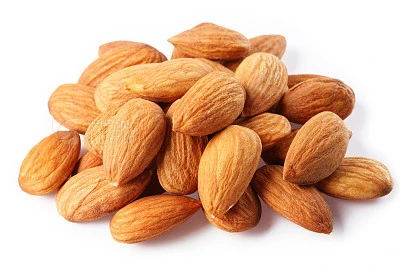
The story of Amygdalin B17 begins with its chemistry and its sources. Chemically, amygdalin is a cyanogenic glycoside composed of two glucose units, an aromatic ring, and a nitrile group . It is not a true vitamin, a distinction that is critical for accurate product positioning . Its primary commercial sources are the kernels of fruits in the Rosaceae family, most notably bitter apricot kernels (Prunus armeniaca L.) . The quality of a raw material is defined by the purity of the amygdalin molecule itself, which is then extracted and purified, often through processes involving solvent extraction and crystallization. However, sourcing this material is fraught with complexity, as the term is often confused with its semi-synthetic analogue, laetrile .
Despite the regulatory cloud, research into the biological activity of amygdalin is surprisingly robust and diverse. In vitro studies have demonstrated a range of potential pharmacological effects, including anti-inflammatory, anti-fibrotic, and immunoregulatory activities . It has been investigated for its effects in models of atherosclerosis, ulcer protection, and even neurodegenerative diseases . More recently, a study using Drosophila (fruit flies) showed that amygdalin supplementation could protect against UV-induced damage by reducing oxidative stress markers and preserving cellular integrity, suggesting a potential role in modulating environmental stress . Its mechanisms of action are complex, involving pathways such as the p38γ-MAPK signaling cascade, which influences cell growth and death .
However, the primary and most controversial application driving interest in Amygdalin B17 is its purported role in cancer support. It has been explored in research on pancreatic, lung, breast, prostate, liver, colon, cervical, and other cancers . The proposed mechanism is that cancer cells, which are thought to have higher levels of β-glucosidase enzymes, break down amygdalin to release hydrogen cyanide, selectively targeting malignant cells . Despite these in vitro findings, clinical evidence is lacking and inconclusive . The National Cancer Institute in the US investigated its anticancer effectiveness on 70,000 patients and concluded it was too toxic for use against cancer . This has led to a stark divide: promising lab data versus a lack of clinical proof and a well-documented safety risk.
The critical issue that defines this ingredient is toxicity. Upon enzymatic hydrolysis by β-glucosidases in the gut, amygdalin breaks down into glucose, benzaldehyde, and hydrogen cyanide . This cyanide release is responsible for its potential toxicity in healthy tissue and has led to its ban by the FDA . This is the single most important factor for any brand or manufacturer to understand. The benefit-risk ratio is considered negative by regulatory authorities, and any product containing it would face significant legal and safety hurdles .
This brings us to the most significant and emerging trend in the field: nanotechnology-based delivery systems. Researchers are actively investigating how to attenuate the toxicity of Amygdalin B17 through controlled release formulations . The concept is to encapsulate amygdalin in nanoparticles, which would slow its release in the body, potentially mitigating the dangerous spike in cyanide while allowing for therapeutic benefits . This approach, including co- or trio-nano-encapsulation with other agents, aims to address both toxicity and drug resistance simultaneously . While still in the research phase, this represents the most promising path forward for any legitimate therapeutic use of this compound .
For any procurement or product development team, a hypothetical checklist for it would be uniquely focused on safety, legality, and future-proofing. First and foremost, understand the regulatory status. It is banned for therapeutic use in the US and Europe, and its sale as a dietary supplement exists in a legal gray area fraught with risk. Second, demand absolute purity and identity documentation. If sourcing for research purposes, a Certificate of Analysis must confirm the molecular identity via HPLC and rule out contamination. Third, scrutinize the source. Is it derived from apricot kernels? This origin must be transparent. Fourth, stay abreast of the science. The future of this ingredient, if it has one, lies in patented, clinically-validated nano-formulations that can demonstrate a safe and predictable release profile . A supplier invested in this cutting-edge research would be a more credible partner than one simply selling bulk powder.
The market trend for it is not about growth in the conventional sense, but about a fundamental scientific pivot. The raw material is a chemical paradox—a molecule with documented bioactivity shackled to a dangerous toxicity profile. The industry trend is moving away from direct consumption and toward controlled-release technologies as a potential solution . The future hinges entirely on whether researchers can successfully develop a nano-encapsulated form that unlocks its therapeutic potential while rendering it safe for clinical use . Until then, it remains a molecule of immense scientific interest but profound commercial and regulatory risk.

In summary, Amygdalin B17 is a case study in the complexity of natural products. Its potential is validated by a substantial body of in vitro science, but its toxicity is equally well-documented and the basis for its regulatory prohibition . For brands, the path forward is not through direct marketing of the raw powder, but through careful observation of the emerging field of nanomedicine. A responsible approach requires a deep understanding of the science, a firm grasp of the regulatory landscape, and a long-term view that prioritizes consumer safety above all else. The molecule's future will be written not by supplement marketers, but by formulation scientists in nanotechnology labs.
IF You Are Interested In The Products We Operate And Other Related Categories, Please Write To Us And Contact Us. At The Same Time, You Can Also Browse Our Website To Find The Products You Want. We Provide Customized Services And Look Forward To Establishing Cooperation With You.
Email:sales@greenherbbt.com