- English
- French
- German
- Portuguese
- Spanish
- Russian
- Japanese
- Korean
- Arabic
- Greek
- German
- Turkish
- Italian
- Danish
- Romanian
- Indonesian
- Czech
- Afrikaans
- Swedish
- Polish
- Basque
- Catalan
- Esperanto
- Hindi
- Lao
- Albanian
- Amharic
- Armenian
- Azerbaijani
- Belarusian
- Bengali
- Bosnian
- Bulgarian
- Cebuano
- Chichewa
- Corsican
- Croatian
- Dutch
- Estonian
- Filipino
- Finnish
- Frisian
- Galician
- Georgian
- Gujarati
- Haitian
- Hausa
- Hawaiian
- Hebrew
- Hmong
- Hungarian
- Icelandic
- Igbo
- Javanese
- Kannada
- Kazakh
- Khmer
- Kurdish
- Kyrgyz
- Latin
- Latvian
- Lithuanian
- Luxembou..
- Macedonian
- Malagasy
- Malay
- Malayalam
- Maltese
- Maori
- Marathi
- Mongolian
- Burmese
- Nepali
- Norwegian
- Pashto
- Persian
- Punjabi
- Serbian
- Sesotho
- Sinhala
- Slovak
- Slovenian
- Somali
- Samoan
- Scots Gaelic
- Shona
- Sindhi
- Sundanese
- Swahili
- Tajik
- Tamil
- Telugu
- Thai
- Ukrainian
- Urdu
- Uzbek
- Vietnamese
- Welsh
- Xhosa
- Yiddish
- Yoruba
- Zulu
Why Did a Shipment of White Willow Bark Extract Get Held Up at Customs Over a Number Nobody Was Checking?
A buyer in Germany called me last year with a problem that's more common than anyone wants to admit. His company had been sourcing white willow bark extract from the same Chinese supplier for five years. Every batch passed their incoming inspection—salicin content around 15%, heavy metals clean, microbials fine. Then one shipment got flagged at customs. The German regulators ran their own test and found total salicylates at 22%, not the 15% on the CoA. The supplier said "we only test for salicin." They weren't wrong. But the regulations in Europe look at total salicylates, not just the one marker compound. The shipment sat in a warehouse for three months while lawyers sorted it out.
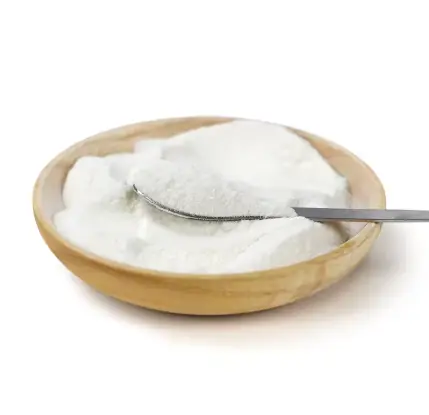
Here's what most buyers don't realize about white willow bark extract. The bark contains a whole family of salicylate compounds—salicin, salicylic acid, salicortin, tremulacin, and others . When your body processes it, they all convert to the active form. But different species of willow have different profiles. Salix alba (white willow) has a different fingerprint than Salix babylonica or *Salix purpurea . A supplier who only tests for salicin can be hitting 15% on that marker while the total salicylates are double that. Same spec on paper. Completely different regulatory status.
The extraction method determines what ends up in your powder. Water extraction pulls a broader spectrum of compounds—you get the full salicylate profile . Ethanol extraction can concentrate specific fractions. Some suppliers use a combination. Some don't know which they're using. A facility manager in Shaanxi once showed me their production line for white willow bark extract. "We do ethanol extraction," he said. "It's faster." I asked if they test for other salicylates. He looked at me like I'd asked for the weather on Mars. "Nobody asks for that."
The history of this ingredient goes back to Hippocrates, who advised people to chew willow bark for pain and fever . The compound was eventually isolated and synthesized into aspirin. But the whole plant extract works differently than the isolated compound. The body absorbs the salicylates gradually, which some studies suggest gives longer-lasting effects with fewer gastrointestinal side effects than aspirin. That's why people still use white willow bark extract in joint health formulas and pain management supplements, even though we have aspirin. The full-plant profile matters.
A quality director once told me they stopped buying white willow bark extract on salicin spec alone after a batch failed in their finished product. "The salicin number was right where we wanted it," she said. "But the product felt different. Customers complained it wasn't working. When we ran a full salicylate panel, the ratio had shifted completely. The supplier had switched species without telling us."

Commercial specs for white willow bark extract vary wildly. Some suppliers offer 15% salicin by HPLC, some 25%, some 50%, up to 98% . The 15% grade is common for dietary supplements. Higher concentrations go into research or pharmaceutical applications. But a 15% salicin extract from one supplier can be water-extracted from Salix alba bark with a full salicylate profile. The same spec from another can be ethanol-extracted from mixed species with high salicin but low other compounds. Same number. Different product.
The market for white willow bark extract has been steady for years—natural pain relief isn't going anywhere. But the regulatory landscape is shifting. Europe looks at total salicylates. Canada has its own limits. The US is looser but still watches. A batch that's fine in one market can get seized in another. Your supplier needs to know where you're selling.
If you're sourcing white willow bark extract, the questions go beyond the salicin spec. What species are you using? What's the extraction method? What's the total salicylate profile? Which markets is this material approved for? Suppliers who can answer these are worth the premium. The ones who can't are selling you a number on a piece of paper.
FAQ
1. What's the difference between salicin and total salicylates in white willow bark extract?
Salicin is one specific compound in the bark, the one most commonly tested on CoAs. But white willow bark contains multiple salicylate compounds—salicylic acid, salicortin, tremulacin, and others—that all convert to active forms in the body . Total salicylates can be significantly higher than salicin alone. Some markets (like Europe) regulate based on total salicylates, not just the one marker. A batch that hits 15% salicin might have 22% total salicylates.
2. What specifications should I look for when sourcing white willow bark extract?
Look for salicin content by HPLC (15%, 25%, 50% are common grades) . Ask for total salicylate data if you're selling into regulated markets. Request species documentation—Salix alba is the traditional source, but other species are used . Check heavy metals (lead ≤3ppm, arsenic ≤1ppm), loss on drying (≤5%), and microbial specs. A supplier who can't provide full salicylate profiling doesn't know what's in their powder.
3. How does the extraction method affect white willow bark extract quality?
Water extraction pulls a broader spectrum of compounds, including the full salicylate profile . Ethanol extraction can concentrate specific fractions but may leave other compounds behind. Some suppliers use a combination. The extraction method determines not just the salicin content but the whole chemical fingerprint of your powder. Ask your supplier how they process it.
4. Is white willow bark extract safe for long-term use?
White willow bark has been used for thousands of years, dating back to Hippocrates . It's generally considered safe for short-term use. However, it contains salicylates, which are similar to aspirin. People with aspirin allergies, bleeding disorders, or those taking blood thinners should avoid it. Long-term use should be discussed with a healthcare provider. The whole plant extract is often better tolerated than synthetic aspirin because the body absorbs it more gradually.
5. How should white willow bark extract be stored?
Store in sealed containers away from moisture, light, and heat. Recommended conditions are cool, dry environments below 25°C. Most commercial extracts maintain stability for 24 months when properly stored. For research-grade material, storage at -20°C is recommended for long-term stability . Always check the manufacturer's expiration date and storage guidelines.
6. What certifications should I look for when sourcing white willow bark extract?
Common certifications include GMP, ISO, Kosher, Halal, and organic depending on your market. Some suppliers offer material compliant with Chinese Pharmacopoeia (CP), United States Pharmacopeia (USP), and European Pharmacopoeia (EP) standards . For European buyers, traceability to specific species and full salicylate testing is critical. Request current certificates and verify they cover the facility producing your material.