- English
- French
- German
- Portuguese
- Spanish
- Russian
- Japanese
- Korean
- Arabic
- Greek
- German
- Turkish
- Italian
- Danish
- Romanian
- Indonesian
- Czech
- Afrikaans
- Swedish
- Polish
- Basque
- Catalan
- Esperanto
- Hindi
- Lao
- Albanian
- Amharic
- Armenian
- Azerbaijani
- Belarusian
- Bengali
- Bosnian
- Bulgarian
- Cebuano
- Chichewa
- Corsican
- Croatian
- Dutch
- Estonian
- Filipino
- Finnish
- Frisian
- Galician
- Georgian
- Gujarati
- Haitian
- Hausa
- Hawaiian
- Hebrew
- Hmong
- Hungarian
- Icelandic
- Igbo
- Javanese
- Kannada
- Kazakh
- Khmer
- Kurdish
- Kyrgyz
- Latin
- Latvian
- Lithuanian
- Luxembou..
- Macedonian
- Malagasy
- Malay
- Malayalam
- Maltese
- Maori
- Marathi
- Mongolian
- Burmese
- Nepali
- Norwegian
- Pashto
- Persian
- Punjabi
- Serbian
- Sesotho
- Sinhala
- Slovak
- Slovenian
- Somali
- Samoan
- Scots Gaelic
- Shona
- Sindhi
- Sundanese
- Swahili
- Tajik
- Tamil
- Telugu
- Thai
- Ukrainian
- Urdu
- Uzbek
- Vietnamese
- Welsh
- Xhosa
- Yiddish
- Yoruba
- Zulu
Is Your Chaga Mushroom Powder Trially Potent or Just a Dark Powder?
If you've sourced ingredients for immune or antioxidant formulations, you've undoubtedly seen Chaga Mushroom Powder on the list. That dark, almost charcoal-like powder stands out immediately. But here's the reality check anyone in R&D will give you: the market is flooded with it, and the difference between a high-potency extract and a worthless, inert powder is invisible to the naked eye. The surge in popularity of this "King of Mushrooms," a parasitic fungus that grows on birch trees, has outpaced many buyers' ability to vet its quality. For a serious formulator, the conversation isn't about whether to use chaga, but how to source a standardized Chaga extract that delivers the ultra-high antioxidant levels (notably from betulinic acid and melanin) and immune-modulating beta-glucans that the research is actually based on.
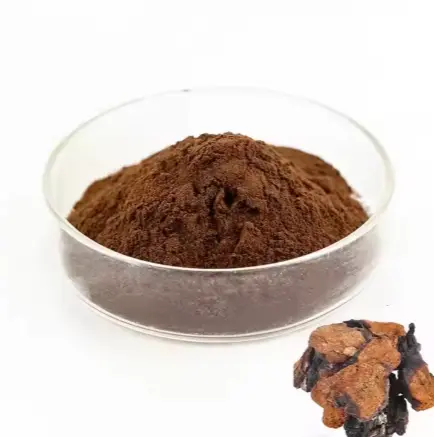
The first thing to understand is that Chaga Mushroom Powder isn't from a typical mushroom fruiting body. It's a dense, woody sclerotium—a mass of mycelium—that grows on living birch trees (Inonotus obliquus). This unique relationship is everything. The bioactive compounds that make chaga valuable, like betulin and betulinic acid (converted from the birch tree) and its own complex polysaccharides, are dependent on this host. Simply put, chaga grown on anything other than birch lacks its defining phytochemical profile. Once harvested, the hard conk must be dried and pulverized. However, a simple ground powder is notoriously difficult for the body to digest due to its chitin content. This is why legitimate Chaga extract powder undergoes a hot water or dual extraction process to break down the chitin and make the bioactive compounds bioavailable. A reputable supplier will standardize their extract to key markers like total polysaccharides, antioxidant capacity (ORAC value), or betulinic acid content.
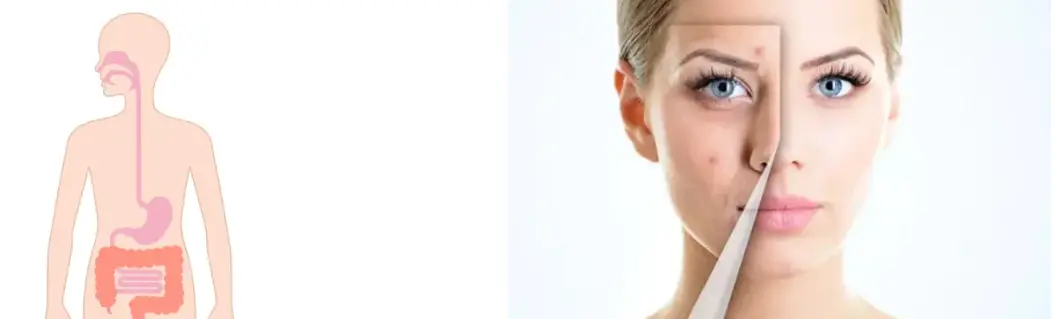
When you have a properly extracted and standardized powder, its applications become powerful and specific. Its primary use is in high-potency antioxidant and immune support supplements. It's formulated into daily wellness blends, often with other adaptogens, and targeted "immune defense" products for seasonal support. The betulinic acid content also drives its inclusion in skin health and "beauty-from-within" formulas, promoted for supporting a clear complexion. Beyond capsules and tablets, a finely milled, water-soluble extract can be used in functional beverages like coffee alternatives and teas, though its strong, earthy flavor requires careful formulation. Unlike many mushrooms, chaga is almost never used in culinary applications due to its woody texture and intense taste.
Given the prevalence of low-quality material, a stringent procurement checklist is your only defense. First, demand host and origin verification. Insist on documentation confirming it is Inonotus obliquus harvested from birch trees in a sustainable, unpolluted region (like the boreal forests of Canada or Siberia). Second, standardization data is non-negotiable. A Certificate of Analysis must show total polysaccharide content (via specific assays) and preferably ORAC value or betulinic acid levels. "Wildcrafted" is not a potency specification. Third, extraction method matters. Ask if it's a hot water extract (for polysaccharides) or a dual extract (to also capture alcohol-soluble compounds like triterpenes). Fourth, comprehensive contaminant testing is critical. As a wild-harvested fungus that grows for years, it must be rigorously tested for heavy metals, microbes, and environmental pollutants.
The trend for Chaga Mushroom Powder is defined by the push for scientific validation and supply chain sustainability. The early hype is giving way to a demand for clinically studied extracts and transparent sourcing. Brands are moving away from generic powder toward standardized Chaga extracts with guaranteed activity. Furthermore, due to overharvesting concerns, the industry is actively developing methods for cultivated chaga mycelium on birch substrates as a sustainable alternative, though its equivalence to wild conks is a key topic of research. Its role is also expanding into pet health supplements and topical cosmetic serums for its antioxidant properties.

In the end, formulating with Chaga Mushroom Powder is a commitment to due diligence. Its remarkable potential is easily lost with poor sourcing. The right supplier acts as a partner in education and quality, providing the hard data that proves you're getting a bioactive, birch-derived extract, not just a milled wood product. For brands, this ensures your product can credibly tap into the powerful antioxidant and immune-support narrative that makes chaga so compelling, turning a trendy ingredient into a trusted, efficacious part of your formula.
IF You Are Interested In The Products We Operate And Other Related Categories, Please Write To Us And Contact Us. At The Same Time, You Can Also Browse Our Website To Find The Products You Want. We Provide Customized Services And Look Forward To Establishing Cooperation With You.
Email:sales@greenherbbt.com