- English
- French
- German
- Portuguese
- Spanish
- Russian
- Japanese
- Korean
- Arabic
- Greek
- German
- Turkish
- Italian
- Danish
- Romanian
- Indonesian
- Czech
- Afrikaans
- Swedish
- Polish
- Basque
- Catalan
- Esperanto
- Hindi
- Lao
- Albanian
- Amharic
- Armenian
- Azerbaijani
- Belarusian
- Bengali
- Bosnian
- Bulgarian
- Cebuano
- Chichewa
- Corsican
- Croatian
- Dutch
- Estonian
- Filipino
- Finnish
- Frisian
- Galician
- Georgian
- Gujarati
- Haitian
- Hausa
- Hawaiian
- Hebrew
- Hmong
- Hungarian
- Icelandic
- Igbo
- Javanese
- Kannada
- Kazakh
- Khmer
- Kurdish
- Kyrgyz
- Latin
- Latvian
- Lithuanian
- Luxembou..
- Macedonian
- Malagasy
- Malay
- Malayalam
- Maltese
- Maori
- Marathi
- Mongolian
- Burmese
- Nepali
- Norwegian
- Pashto
- Persian
- Punjabi
- Serbian
- Sesotho
- Sinhala
- Slovak
- Slovenian
- Somali
- Samoan
- Scots Gaelic
- Shona
- Sindhi
- Sundanese
- Swahili
- Tajik
- Tamil
- Telugu
- Thai
- Ukrainian
- Urdu
- Uzbek
- Vietnamese
- Welsh
- Xhosa
- Yiddish
- Yoruba
- Zulu
How Do You Navigate the Complex World of Authentic Antrodia Camphorata Extract?
Let's address the elephant in the room right away: Antrodia Camphorata is not your everyday mushroom extract. You don't casually add it to a blend because it's trending. Working with it means stepping into a space defined by deep tradition, significant scientific interest, and, frankly, a minefield of quality and authenticity issues. For formulators in the high-end nutraceutical or functional food space, it represents both a pinnacle and a peril. The interest isn't driven by marketing alone but by a body of research on its unique triterpenoids and polysaccharides that has attracted serious attention for liver health and immune modulation. This creates a market where the stakes for getting a genuine, potent product are incredibly high.
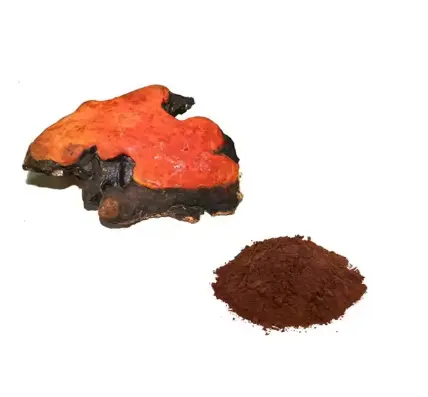
The core challenge begins with the raw material. True Antrodia camphorata is a parasitic fungus that grows exclusively on the inner heartwood of the endangered native Taiwanese camphor tree (Cinnamomum kanehirae). Wild sources are vanishingly rare and protected. Therefore, almost all commercial material comes from controlled solid-state or liquid fermentation. This isn't a downside—it's a necessity for sustainability and consistency. However, it means the entire value of the extract hinges on the fermentation substrate and process. A quality supplier will use a medium that includes fragments of the actual camphor wood to encourage the production of the prized camphorane-type triterpenoids. The difference between a generic mycelial biomass and a properly induced Antrodia camphorata extract is profound, and it's visible in the HPLC profile.
Application is squarely in the premium, targeted supplement category. You won't find it in a general multivitamin. It's formulated for specific, outcome-driven products: comprehensive liver support formulas (often with milk thistle and schisandra), high-potency immune system modulators, and even in some cutting-edge cosmeceutical serums for its antioxidative properties. The dosage is key—it's an ingredient used at efficacious, clinically studied levels, not as a token inclusion. Its flavor is intensely bitter and woody, making encapsulation or use in coated tablets almost mandatory. The branding around it is less about daily wellness and more about delivering a researched, potent intervention.
For a procurement specialist, due diligence is exhaustive and non-negotiable. Your checklist must be forensic:
Species Authentication (DNA Testing): Given the high value and potential for substitution, proof that the material is Antrodia camphorata and not a look-alike like Antrodia cinnamomea or other fungi is step one.
Triterpenoid & Polysaccharide HPLC Fingerprinting: You're not just buying a "10:1 extract." You need the chromatogram showing the specific, characteristic peaks for compounds like Antcin K, Antcin C, and specific polysaccharide profiles. This is the extract's identity card.
Fermentation Process Disclosure: Was it solid-state fermentation on a wood substrate or liquid fermentation? The former typically commands a premium and is considered more authentic.
Heavy Metal & Mycotoxin Testing: Fermented products require rigorous testing for both environmental contaminants and potential process-related toxins.
The trend is moving from a broad-spectrum mushroom extract to a highly characterized, single-compound-targeted ingredient. The most advanced suppliers are moving beyond simple extracts and are beginning to isolate and standardize for specific, high-activity triterpenoids. Furthermore, as research grows, we're seeing segmentation emerge: extracts optimized for liver health markers versus those targeted for immune cell signaling. The future lies in these specialized, patent-protected fermented Antrodia extracts with proprietary fermentation conditions, backed by specific clinical trials. The market is bifurcating into commodity-grade mycelium and genuine, fully-characterized extract.

Ultimately, sourcing Antrodia Camphorata Extract is a partnership built on transparency and technical depth. You are not just buying an ingredient; you are investing in a supplier's scientific rigor and ethical sourcing. The right partner will provide not just a CoA, but a dossier of research, process validation, and traceability back to the fermentation tank and substrate source. For a brand, it offers a chance to play in the highest tier of evidence-based botanicals, but it demands a commitment to education—explaining to consumers why this rare, meticulously produced extract justifies its place and price. It's the definitive "less is more" ingredient, where unparalleled specificity trumps everything.
IF You Are Interested In The Products We Operate And Other Related Categories, Please Write To Us And Contact Us. At The Same Time, You Can Also Browse Our Website To Find The Products You Want. We Provide Customized Services And Look Forward To Establishing Cooperation With You.
Email:sales@greenherbbt.com