- English
- French
- German
- Portuguese
- Spanish
- Russian
- Japanese
- Korean
- Arabic
- Greek
- German
- Turkish
- Italian
- Danish
- Romanian
- Indonesian
- Czech
- Afrikaans
- Swedish
- Polish
- Basque
- Catalan
- Esperanto
- Hindi
- Lao
- Albanian
- Amharic
- Armenian
- Azerbaijani
- Belarusian
- Bengali
- Bosnian
- Bulgarian
- Cebuano
- Chichewa
- Corsican
- Croatian
- Dutch
- Estonian
- Filipino
- Finnish
- Frisian
- Galician
- Georgian
- Gujarati
- Haitian
- Hausa
- Hawaiian
- Hebrew
- Hmong
- Hungarian
- Icelandic
- Igbo
- Javanese
- Kannada
- Kazakh
- Khmer
- Kurdish
- Kyrgyz
- Latin
- Latvian
- Lithuanian
- Luxembou..
- Macedonian
- Malagasy
- Malay
- Malayalam
- Maltese
- Maori
- Marathi
- Mongolian
- Burmese
- Nepali
- Norwegian
- Pashto
- Persian
- Punjabi
- Serbian
- Sesotho
- Sinhala
- Slovak
- Slovenian
- Somali
- Samoan
- Scots Gaelic
- Shona
- Sindhi
- Sundanese
- Swahili
- Tajik
- Tamil
- Telugu
- Thai
- Ukrainian
- Urdu
- Uzbek
- Vietnamese
- Welsh
- Xhosa
- Yiddish
- Yoruba
- Zulu
Can Your Reishi Mushroom Powder Pass the Modern Buyer's Test?
Walk into any health store or browse an online supplement retailer, and you will see it—Reishi Mushroom Powder is everywhere. It has become a shorthand for adaptogenic, immune-supporting wellness. But for every brand making serious claims, there is a formulator who has learned the hard way that not all red reishi is created equal. The market is flooded with options, from simple ground fruiting bodies to high-tech extracts, and the gap between them is not just about price; it is about predictable biological activity. The real conversation among professionals has shifted from "should we use reishi" to "how do we source a reishi powder that actually works and stands up to scrutiny." This means navigating a landscape where traditional reverence meets modern pharmacology and demanding supply chain transparency.
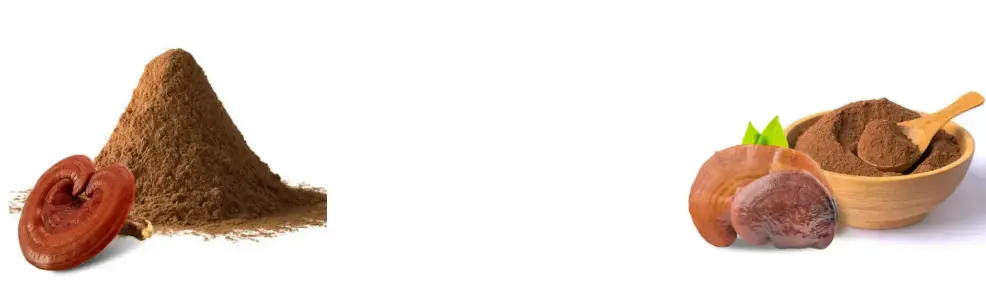
The first layer of that transparency is the raw material itself. True Ganoderma lucidum, the prized red reishi, is a hardwood-loving fungus. Its quality begins with its growth substrate and method. While wild-harvested reishi has cachet, cultivated reishi from controlled environments often provides superior consistency in bioactive compound profiles. The critical distinction for formulators is between using the whole reishi mushroom powder (ground fruiting body) and a concentrated extract. The whole powder contains the full spectrum of fungal chitin and fibers, which can limit the bioavailability of its key compounds, the triterpenes and beta-glucans. A hot water or dual-extraction process breaks down the chitinous cell walls, concentrating these actives. Therefore, a supplier should be able to tell you exactly what you are buying—is it a culinary-grade whole powder or a standardized reishi extract powder with guaranteed levels of polysaccharides and triterpenes? This fundamental choice dictates your dosage, cost-in-use, and the clinical validity of your health claims.
Understanding this leads directly to smart application. A whole reishi mushroom powder might be perfectly suited for adding an earthy, functional note to adaptogenic coffee blends, elixirs, or savory broths where the fiber is a benefit. However, for a dietary supplement capsule making specific immune or stress-support claims, a potent extract is non-negotiable. This is where you see reishi integrated into sophisticated sleep and relaxation formulas (paired with magnesium and L-theanine), comprehensive immune system blends (with zinc, vitamin C, and other mushrooms), and high-potency cardiovascular wellness supplements leveraging its triterpenes. The bitter, woody taste of a strong extract also dictates delivery, making encapsulation or use in strongly flavored, sweetened functional beverages the most practical path.

This brings us to the core of modern procurement. Your supplier checklist must move beyond basic specs. The most important document is the Certificate of Analysis (CoA) that details standardization. For reishi, this typically means testing for beta-D-glucan content (often targeting 20% or higher in good extracts) and sometimes total triterpenes. A CoA that only shows a "10:1 extract" ratio is insufficient. Next is origin and cultivation documentation. Was it grown organically? On what substrate (oak logs vs. sawdust blocks)? This affects the phytochemical profile. Third, rigorous contaminant testing is essential for any fungus, which can bioaccumulate heavy metals from its growth medium. Tests for lead, cadmium, arsenic, and microbial limits are standard requirements. Finally, consider the extraction method—hot water extraction captures immune-modulating polysaccharides, while alcohol extraction captures the calming triterpenes; dual-extraction aims for both.
The industry trend is definitively moving toward clinically validated, trademarked reishi extracts. As the market becomes crowded, brands are competing on the scientific substantiation behind their chosen ingredient, not just the inclusion of reishi on the label. Suppliers who invest in human clinical trials on their specific extract are leading the market. Simultaneously, there is a growing interest in full-spectrum, culinary-grade reishi powders for the functional food and beverage space, where "whole food" and "clean label" are powerful drivers. The future will likely see more fractionation, with isolates targeting very specific triterpenes for research-backed applications in neurological or metabolic health.

In the end, sourcing Reishi Mushroom Powder is an exercise in alignment. You must align the ingredient type (whole powder vs. extract), its standardization, and its supporting science with your product's intended benefit, format, and marketing story. The right supplier is a partner in this process—they provide not just a product, but the transparency, data, and expertise to ensure your formulation delivers on its promise. For brands that get this right, reishi moves from being a trendy ingredient to a cornerstone of credibility in the competitive wellness market.
IF You Are Interested In The Products We Operate And Other Related Categories, Please Write To Us And Contact Us. At The Same Time, You Can Also Browse Our Website To Find The Products You Want. We Provide Customized Services And Look Forward To Establishing Cooperation With You.
Email:sales@greenherbbt.com