



Blog
Is Your Maca Extract Powder Missing the Mark Without Black Ecotype and 0.6% Macamides?

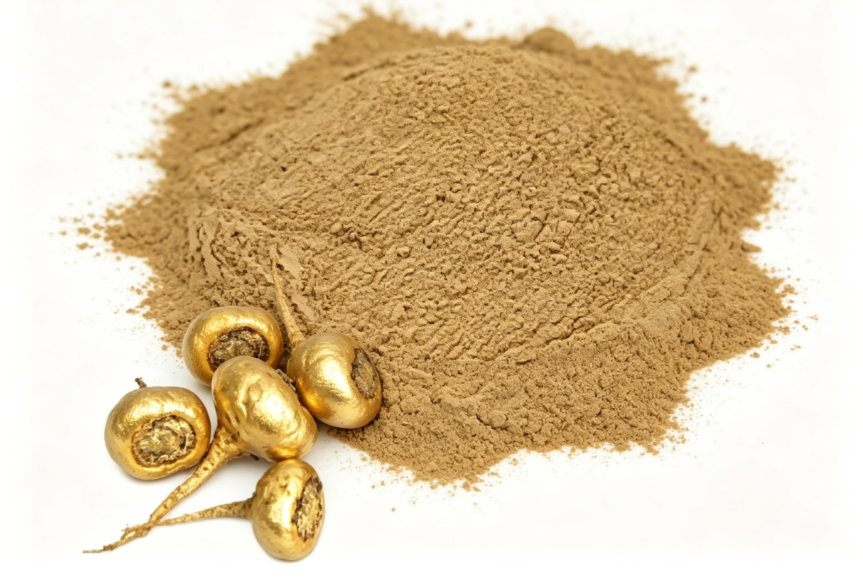
If you’ve formulated with maca root extract, you already know the “Peruvian ginseng” story. The problem is that most procurement teams buy generic powder without realizing that Lepidium meyeniiisn’t a single ingredient—it’s at least four distinct ecotypes (black, red, yellow, purple) with completely different clinical outcomes. A recent Nutrientsreview highlighted that 50% of published maca studies fail to specify which color they used, meaning you could be formulating a men’s fertility product with an extract that has no data for sperm motility. The real value of a high-quality maca extract powder isn’t just the protein or carbohydrate content; it’s the concentration of macamides and the specific glucosinolate profile dictated by the ecotype.
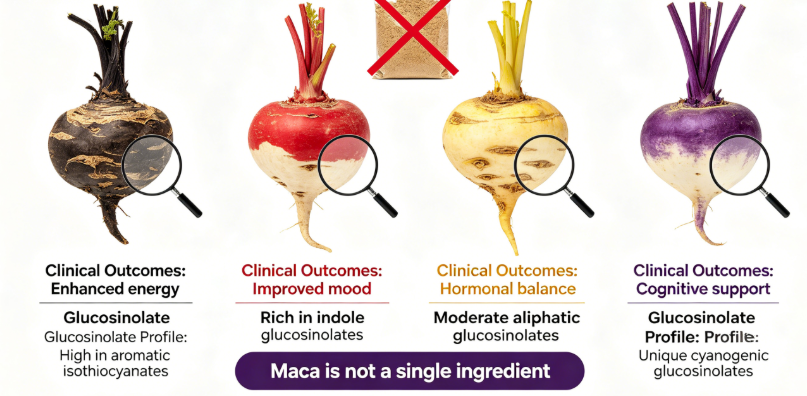
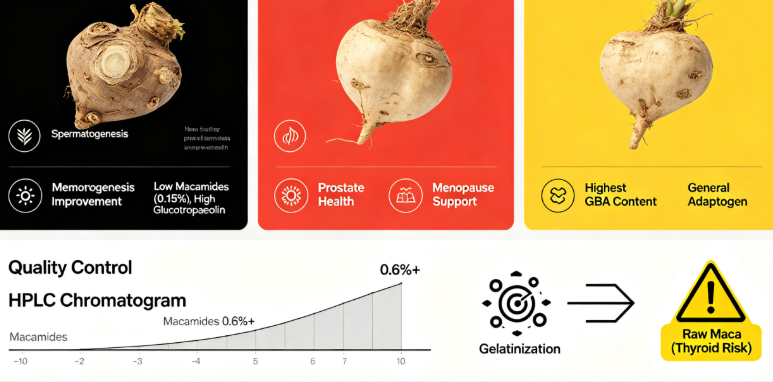
When we talk about organic maca root black, we are discussing a completely different phytochemical fingerprint than yellow maca. Black maca is the only ecotype showing consistent data for spermatogenesis and memory improvement via acetylcholinesterase inhibition. However, here’s what most suppliers won’t tell you: black maca actually contains lower macamides (around 0.15%) compared to yellow or red. Its efficacy comes from a high concentration of glucotropaeolin and its unique polyphenol fraction. If your COA only tests for total macamides, you are missing the primary active markers for black maca. Conversely, red maca shows the strongest signal for prostate size reduction in animal models and has the highest GABA content, making it the logical choice for menopause support formulas. Yellow maca remains the general adaptogenic base, but assuming all three work the same is a formulation error.
The industry standard for a maca root extract powder should be a 10:1 ratio with a minimum of 0.6% macamides verified by HPLC. I see too many buyers accept UV-based “glucosinolate” percentages, which are essentially useless because they measure compounds common to all cruciferous vegetables. If you want a best maca extract, you need to see the HPLC curve for the maca amides themselves. Additionally, you must address the gelatinization process. Raw maca contains high levels of starch and active myrosinase, which can convert glucosinolates into goitrogens—compounds that interfere with thyroid function. For any daily adaptogen product, gelatinized maca (where steam extrusion removes the starch) is the safer default. It retains the heat-stable macamides while eliminating the digestive issues and thyroid risks associated with raw powder. Our GMP facility supplies both gelatinized and raw options, standardized to 0.6% or 1.2% macamides, all sourced from Junín, Peru, above 4,000 meters. If you are ready to move past generic superfood flours and formulate with verified actives, explore our standardized Maca Extract Powder to review specifications and request a sample.
Frequently Asked Questions (FAQ)
Q: Which ecotype should I use for men’s fertility products?
A: Black maca has the strongest spermatogenesis data; ensure your extract is tested for glucotropaeolin, not just macamides.
Q: Is 0.6% macamides sufficient for a 10:1 extract?
A: Yes, that is the industry HPLC baseline; anything lower is likely unstandardized flour with no clinical backing.
Q: Should I choose gelatinized or raw maca for daily supplements?
A: Gelatinized is safer for daily use; it removes goitrogenic compounds and improves digestive tolerance.