

Blog
Did Your Lion’s Mane Mushroom Extract Powder Lose Its Magic?

It started with a phone call from a regular client in Chicago. He sounded tired. “The new batch just isn’t working,” he said. “My customers are complaining. The focus is gone, the clarity is gone. It’s like the magic died.” I asked him to send over the COA from his new supplier. When I opened the PDF, the numbers looked perfect—30% polysaccharides, high ratios, low price. On paper, it was a dream. In the bottle, it was a ghost.

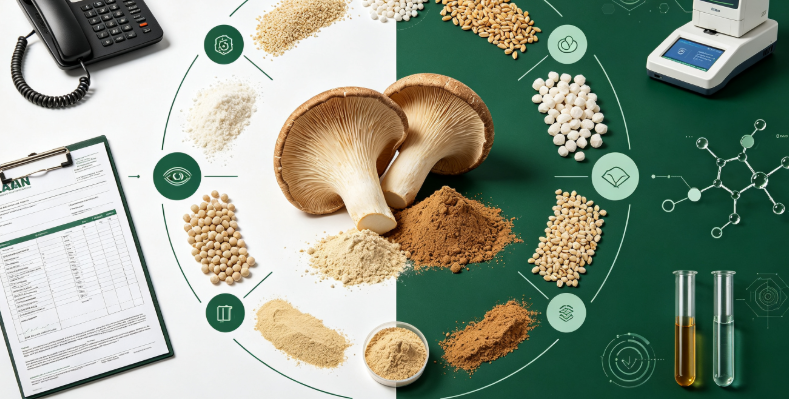
I asked him a simple question: “Is it fruiting body, or is it mycelium on grain?” There was a long silence on the line. He didn’t know. His previous supplier, the one he’d left for a cheaper option, had always sent him a fine, tan powder that smelled earthy and rich. This new stuff was lighter, fluffier. I told him to take a spoonful and chew it. “Does it taste starchy? Like rice or oats?” He called back ten minutes later. His voice was flat. “It tastes like cardboard. And a little bit like rice.”
That was the moment the penny dropped. He hadn’t bought a Lion’s Mane Mushroom Extract Powder; he had bought mushroom-grown grain. The supplier had fed the mycelium a diet of rice or rye, let it grow, and then ground the entire brick—grain, mycelium, and all—into a powder. He was paying top dollar for 40% starch. The clinical promise of Lion’s Mane, the NGF support, the neuronal health—that lives in the fruiting body. But his “extract” was mostly just the substrate it grew on. We ran a quick starch assay on his sample. It came back at 42%. He hadn’t been cheated on purpose, exactly. He had just been sold a commodity by someone who knew he wouldn’t ask the right questions.

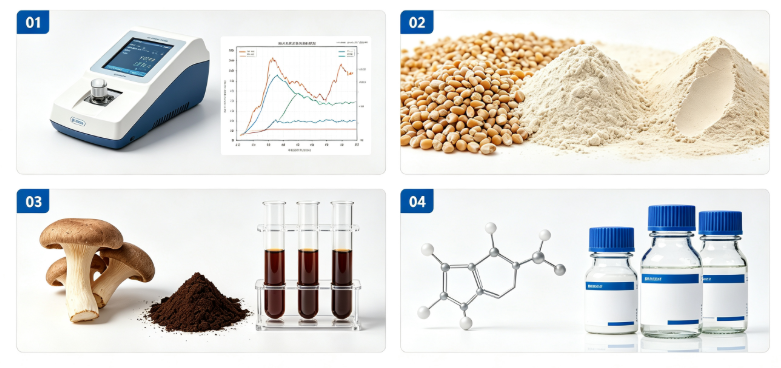
The second mistake was buried deeper. The COA boasted “30% Polysaccharides” measured by UV. I had to explain that UV doesn’t know the difference between a beneficial beta-glucan and a scoop of cornstarch. It just sees “sugar chains” and reacts. His 30% was a lie built on a technicality. To get the real benefit, you need a beta glucan lions mane extract, verified by a specific beta-glucan assay that ignores the starch and counts only the active compounds. Without that, you’re just swallowing expensive plant fiber.
He switched back to our lion’s mane mushroom extract fruiting body the next week. We sent him a sample of our dual-extract powder—water-pulled for the beta-glucans, ethanol-pulled for the hericenones. It was heavier, finer, and smelled like a damp forest floor. He called me a month later. “It’s back,” he said. “The magic is back.” He didn’t care about the ratios anymore. He cared about the feeling. And that feeling is why we never cut corners on the extraction, why we only use the fruiting body, and why we test for what actually matters, not what looks good on a spreadsheet.